I will leave out the whole Man on a cloud oversimplification and assume that to be a metaphor for something that cannot be properly comprehended.
Is all this the creation of a Supreme Being? Is that Being:
- All loving? We are Its beloved children
- Why do evil and suffering exist?
- Vengeful and to be feared? We exist to worship and sing Its praises.
- We must adhere to Its rules, yet we have urges to violate those rules that could only be implanted by It. Sounds like a rigged contest.
- Outside us? The cloud man is the oversimplified version of this.
- It created the universe and everything in it but is not a part of it. It exists in a dimension outside of ours.
- Inside us? God is within all of us.
- This one gets convoluted fast!
- Is It inside only?If It is and that makes God, our conscience; does that make our ego Satan?Is It inside and outside?Does that translate to popping in and out when necessary?Or is it a random thing?What is It doing in there anyway?
- Controlling – so much for free will
- Is It inside only?If It is and that makes God, our conscience; does that make our ego Satan?Is It inside and outside?Does that translate to popping in and out when necessary?Or is it a random thing?What is It doing in there anyway?
- Spectating – God experiencing mortality
- Suggesting – The angel and devil on each shoulder thing.
- Is it just humans or all animals?
- This one gets convoluted fast!
That last one expands all the way out to:
- It is nature, the universe, everything. One of the most ancient beliefs of our species; the worship of nature itself.
- Earth is our Mother and we must take care of Her. All life on earth is connected and codependent. Any worshipping might just as well be directed to a tree or a wolf. It is everywhere.
- A variation on this theme might be Shinto and the worship of Kami. The connection does not seem as intrinsic there. Kami are sacred spirits or divine forces that inhabit elements like mountains, rivers and ancestors, apart from the humans who worship them.
- Witchcraft is a very human addition to this and will be part of an interesting post later.
What if there were no God?
Where the hard-line atheists stand. I suppose a more moderate stance would be that of the skeptic, “I’m not saying it 100% doesn’t exist, I’m just saying that based on the evidence, I don’t buy it”. Not the same as a wishy-washy fence sitting agnostic, more of a person willing to sit with not knowing. A refusal of blind faith so to speak.
“A claim made without evidence can be dismissed without evidence”
Hitchen’s razor.
Another rabbit hole we will venture down in the future.
We all must face our mortality, and our insignificance in the grand scheme. At some point we will all cross the line into nothingness or any other possibility. Most cultures have a pre-existing belief system for explaining or at least dealing with the way things are. They often offer some form of doctrine for the faithful to follow so that they may improve their chances of eternal life in a better place when the lights go out behind the eyes.
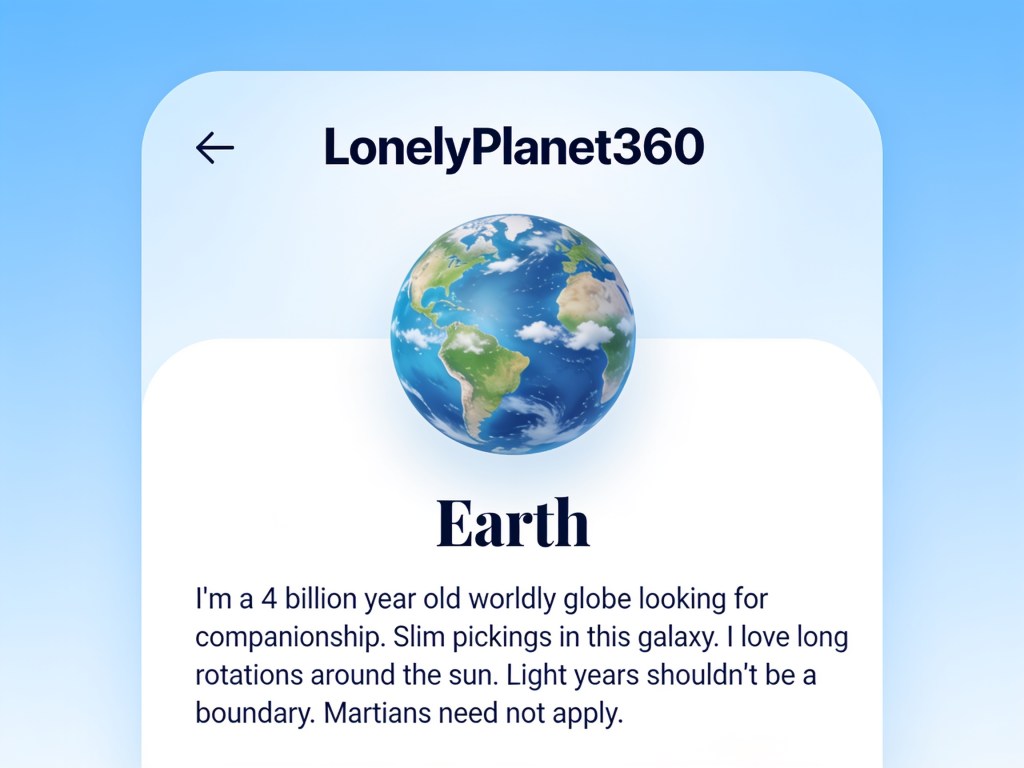
The alternative can seem very bleak indeed. A plethora of conscious beings on a rock rotating around a sun in a solar system hurtling through a lonely infinite universe. You a born, you live and you die. What happens after that? We have no idea. All we know is that you decompose, thus in the most natural way, if you were just buried in the dirt with no coffin, you would literally become part of the Earth again. There’s a similar explanation with atoms; something about the amount of atoms on earth never changes regardless of births and deaths.
Have you heard about this bloke called Siddhartha?
Better known as the Buddha, he had a view on the circle of life that was similar to the scientific model, in that it offered nothingness as a prize. Being a Hindu since birth, gave him a little more flair for fables and ease with the supernatural, but God was not part of his teaching. Karma and reincarnation are not answerable to a divine creator.
Even Hinduism seems to not have one all-powerful God. The plethora of gods are all beings existing inside Atman and Brahman – the all-pervading ultimate reality of the universe. It’s all very different from the Abrahamic religions and I’m still getting my head around it.
One way I have simplified it is with one of my favourite childhood TV shows “Monkey” (2 October 1978 –4 May 1980). Gods and demons are just different entities existing on separate plains that sometimes meet and have fights with exotic weapons. Okay leave out the last part (although some of that Hindu stuff gets pretty sword and sorcery type awesome!). The point is that the otherworldly beings are not all-powerful Gods. There is a higher power than them.
You may be reincarnated as a god, but that doesn’t mean you are The God.
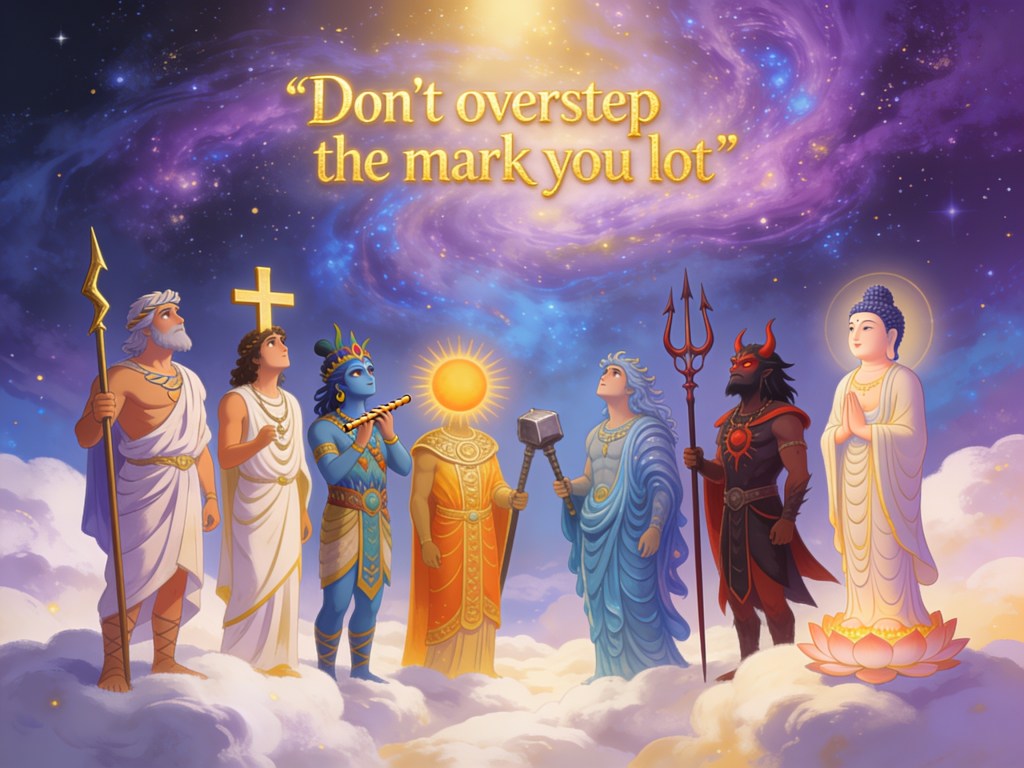
As for the whole Brahman-Atman thing, I will only add that the way I get it is that Brahman is the everything and Atman is the everything seeing itself as separate. To me it’s one of those concepts that only makes sense when you don’t stare directly at it. In peripheral vision it looks clear, but it becomes more obscure the more you try to focus on it.
Shit! I was raised catholic and I still don’t get the whole Father, Son and Holy Spirit enigma. Anyway, for our first outing it is enough to recognise that Eastern religion evolved within a different mindset than the desert religions. Each school of thought shares fundamental aspects with their predecessors from the same region. Taoism (I won’t go into it here) would be easier to comprehend for a person raised on eastern religion and/or philosophy than a westerner.
I’m sure I went off the track there. I think the idea started with the scientific and observable fact that the human body, like all animals, once dead, decays and returns to the eco system. No heaven, no hell. The reconnection of Atman and Brahman sounds like a mystical version of that.
As for Buddha? He was a teacher, not a God. You were not supposed to pray to him. Death is the end for the ego. The man Siddhartha Gautama is no more. Reincarnation is not rebirth. Something carries on, but it isn’t the personality and memories. That’s a whole other post or ten. I will just add that much like the teachings of Jesus Christ, The Awakened One’s message has splintered into a host of different and even contradictory schools.
So you have a vast variety of unique religions and philosophies coming from separate starting points, branching out and forming a complex web of ideologies with their own dogma, canon and all manner of eccentricities. True believers stand staunchly behind their faith and do not take kindly to it being mocked. Though I’m certain they all take the piss out of the doctrine of other groups.
Then you have the clear headed non-biased scientists, who are only interested in the truth and would never hold steadfast to a theory just because someone has discovered a potential fault with it. Sarcasm intended. Yet another post or two to come.


Leave a Reply