
I have made a conscious decision to avoid turning this hypothetical into a drama. I considered having disputes, sackings and walk-outs, but that would just deflect from the point of the exercise at this stage – maybe later.
Things are getting hectic over at Joe’s chairs. He has secured contracts with two large furniture franchises on top of ‘Sitting Ducks’ and all his smaller clients. He cannot keep up with demand, and his 3 employees are stretched to the limit. They have even started declining overtime because they are becoming exhausted. Joe is running himself ragged trying to capitalise on the boom.
#2 has transitioned to leadership well and #4 has almost completed his training; he is already turning out 5 chairs a week before overtime. Everyone is doing their best, but if they cannot supply the stores sufficiently, they may lose customers and/or contracts.
Joe has been doing his homework on running his business and he knows that he has two main options when it comes to increasing production: more staff or smarter operations. He was planning on hiring a new trainee once #4 got his stripes. However, right now he needs a fully productive tradie or two just to keep up with demand. Hire some temps maybe?
The available technological advances are not worth the investment at this juncture and Joe would end up wasting a lot of their potential while going into further debt. Smarter operations? What does that entail? One good word for it would be ‘streamlining’. Finding the optimum use of your resources; workers, equipment and time.
This is where Henry Ford and McDonalds usually enter the conversation. Instead of having 10 men build 1 car each a week; what if you fixed it so they could work together in an onflow type system. Get it right and they could turn out maybe twice as many completed cars in the same amount of time.
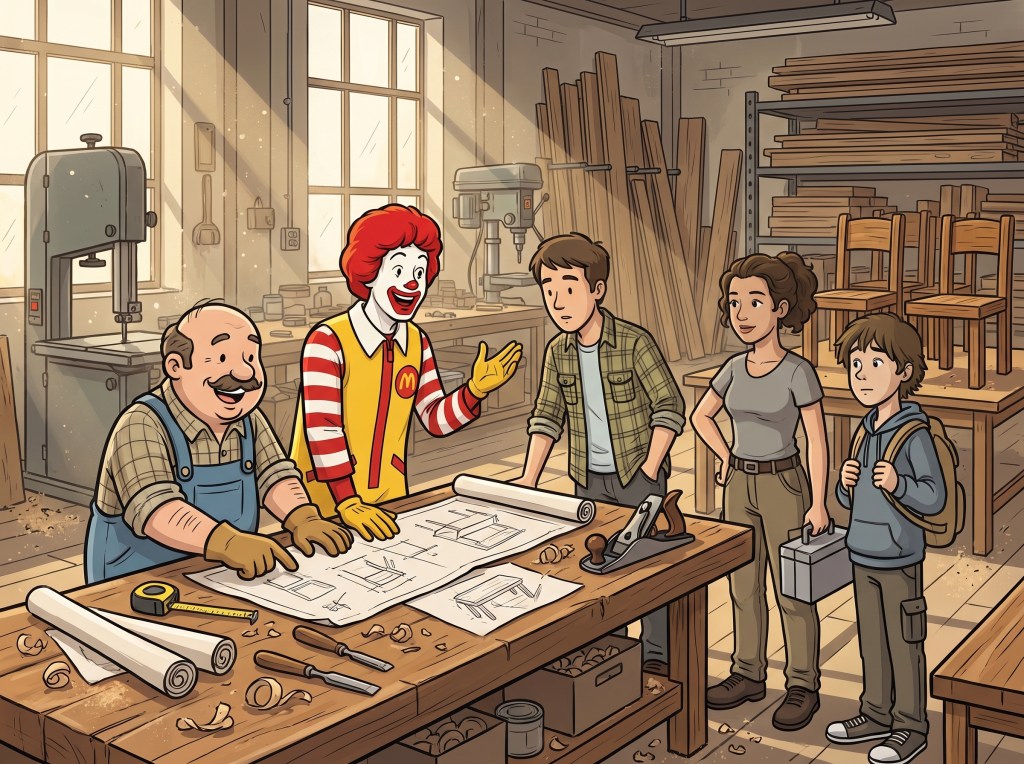
Joe knows how to make good chairs. At present Joe’s chairs only produce two styles of chairs. In theory that can easily translate into a hamburger or a cheeseburger if he can come up with is own “Speedee Service System”.
Joe is too swamped to do any extensive research, so he outsources for advice. He pays an egghead to observe his operation and come up with a way of optimising the resources at his disposal to maximise output. Joe pays for this and asks for nothing from his employees; the chance that this ‘expert’ is a fool is all Joe’s risk.
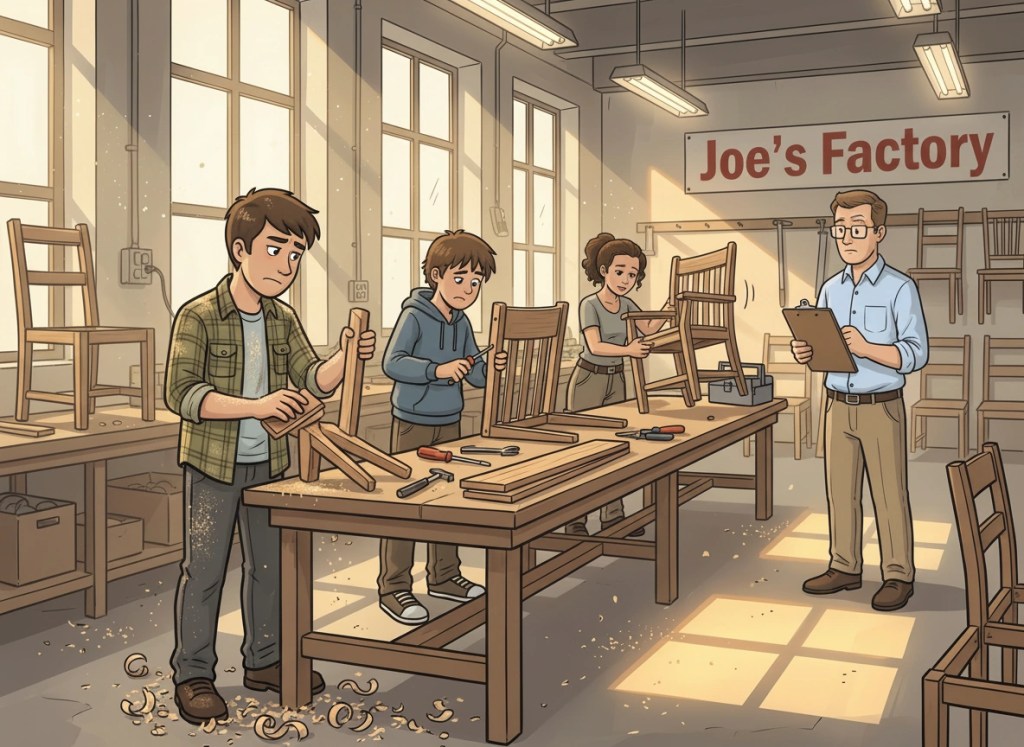
In this, my make-believe world, most things go to plan, so Joe ends up with a clever new system that will increase his team’s chair production by 50%. He will need to purchase a few new machines, but they will pay for themselves over time. If Joe hires another person, he can boost that increase even more. That person need not be a tradie so he can pay them minimum wage and not spend money on training and tools. This person will function as a juncture between the new specialised workstations.
Rather than having three people making complete chairs from scratch, the team now take on separate segments of the manufacturing process. There are many teething problems, and Joe listens carefully to suggestions from the team. He also visits his customers to ease their concerns about supply and promote his new and improved production method (not all his secrets, mind you).
Joe hires a couple of temporary tradies to help with the workload along with his new factory hand.
After a couple of frustrating months, the team gets into the swing, and Joe lets his temps go. The new grunt is speeding things up even more and the orders are being filled at a much better rate. Profits are rising steadily and Joe is able to invest some of it after he makes his repayments to the bank.
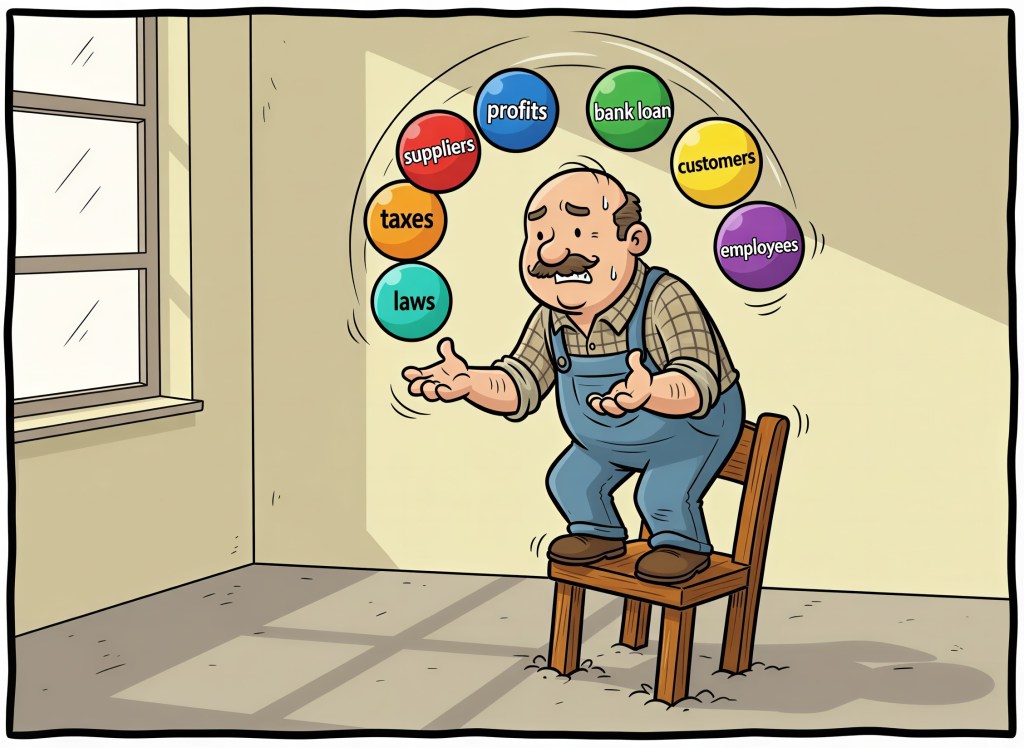
That Christmas Joe throws an extra-fancy party and gives everyone a nice bonus. Onwards and upwards for the new year! Everyone is happy???
There are a few flies in the soup:
- #2 reckons he deserves a pay-rise for all the extra pressure he went through. At the very least he should have gotten a larger bonus than the rest.
- All three of the original team think they had way more to do with the creation of the new system than the minor modifications they implemented. They know Joe paid a lot of money to some ‘know-it-all to come in and fuck around’, but they genuinely believe they were the major orchestrators of the increased efficiency.
- They also hold resentment for all the extra work they did during the hectic period and through the transition. The massive amount of overtime they were paid just doesn’t figure in that equation for them.
- On the contrary, they are now bitter because the improved operations have significantly reduced the need for extensive overtime and their pay has dropped.
- Joe’s relationship with the bank and his customers; the loans he must repay and the way he obtained such fruitful customers and managed to keep them during the unsteady times is not on his team’s radar at all.
- While Joe is busy planning how to use the extra revenue for improvement and growth, his team are wondering why he isn’t sharing the spoils.
- #5 hears all these grievances and can’t help but ponder the idea that he will never become a tradie and earn the good money the others are all on.
Stay tuned folks.



Leave a Reply